

When you’re reading, it’s very important that you’re projecting expectations, interests, and things you’re trying to figure out onto the page.
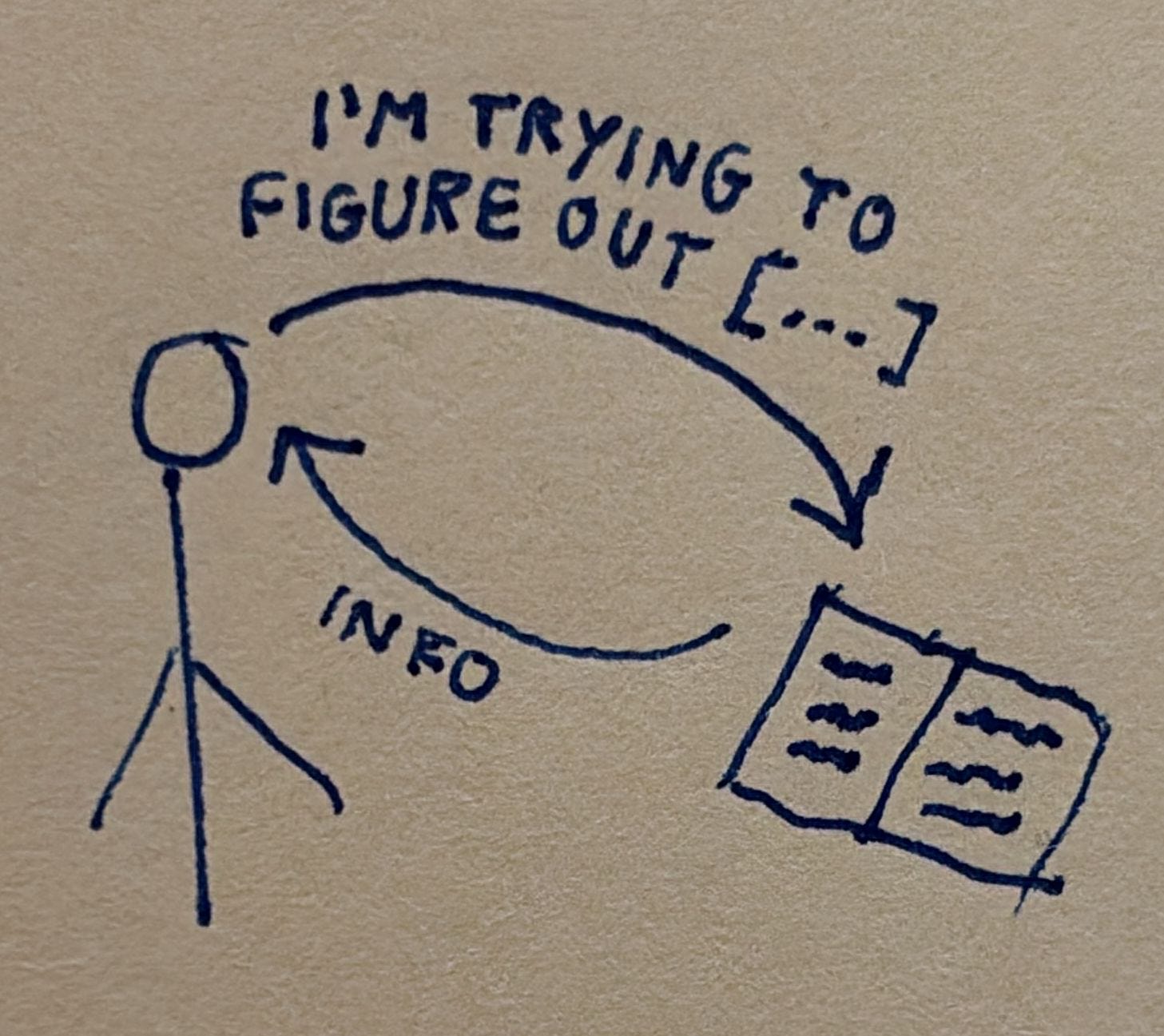
If you don’t have a quest in mind when you’re reading, the words will wash over you and you won’t have enough footholds to grasp onto.
Reading-with-intent-to-write (what we did at Inkhaven) was really good for latching onto footholds. I’ve been slacking — not blogging my every musing. I need to get back into it, because it helps me process information better.
Here’s a very incomplete sample of some questions that I have on my mind while reading. This list is pretty abstract. I’ll update it with more concrete ones as I read and get reminded of them.
How can we have a systematic study of what’s not ‘priced in’? How can we properly evaluate counterfactuals?
In the future, will we work? Should we? Do I want to drive us towards a ‘UBI-with-strings-attached’ world?
My piece on labor automation doesn’t say anything about population growth / extraterrestrial expansion / digital mind uploads… . But Bostrom, and many other futurists, think these are important.
How can I improve my research on LM behavior, continual learners who can block unwanted updates, privileged access hypothesis, context injection vs. fine-tuning, protection against data poisoning, etc.?
How can I do research that wouldn’t otherwise get done?
Which fields should I be pivoting towards?
How can we develop better cognitive enhancement technologies?
What kinds of things might ASI discover?
What kinds of cooperative / competitive equilibria, or flavors of social organization, exist, that I haven’t even considered?
How does one undergo a lot of viewquakes quickly?
essentially, follow-ups to everything on my blog
Robin Hanson classic on this subject: https://www.overcomingbias.com/p/chase-your-readinghtml